
Use the Manage All Assets page to view, monitor, and perform actions on all backed-up Microsoft 365 assets across workloads such as Microsoft Exchange, OneDrive for Business, and SharePoint Online.
Log in to the CrashPlan Admin Console.
From the left navigation pane, click Manage All Assets.
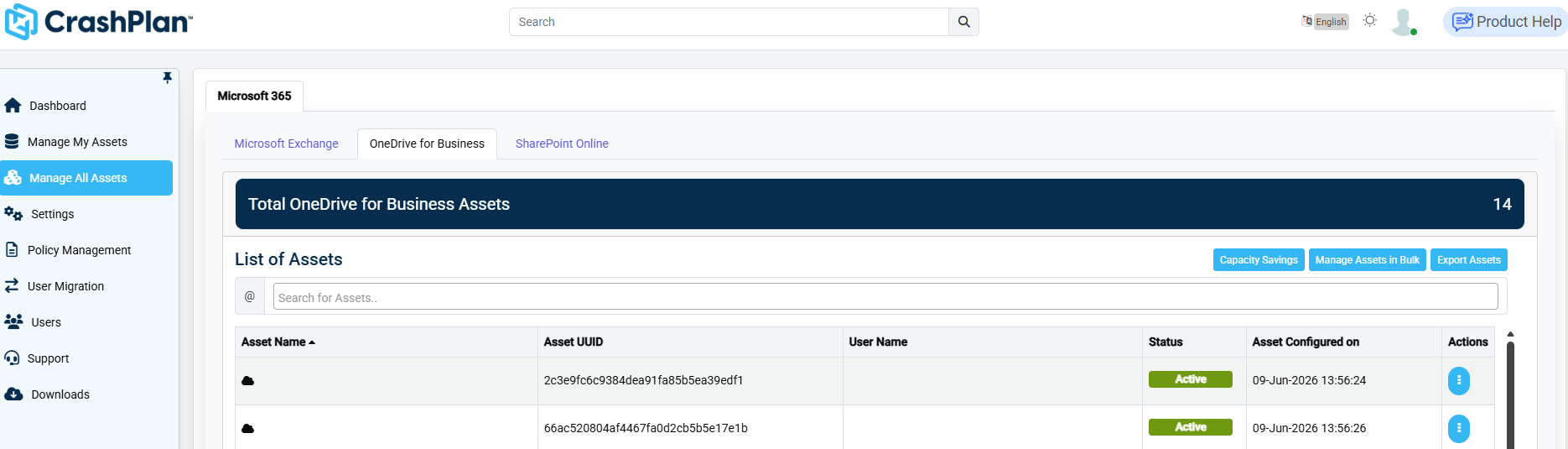
Select the required workload tab:
Microsoft Exchange
OneDrive for Business
SharePoint Online
Review the asset summary displayed at the top.
Example: Total OneDrive for Business Assets: 14
Use the Search for Assets field to quickly locate a specific asset by email address or name.
Review asset details in the asset list, including:
Asset Name
Asset ID
User Email
Backup Status
Last Backup Timestamp
Click on an asset name to open and browse its backed-up contents.
Use the available actions at the top-right for bulk management:
Capacity Savings – View and manage storage optimization opportunities. For more information, see Capacity Savings for Microsoft 365. The administrators can validate impact through Dry Run before committing changes with Live Run, reducing risk and improving confidence in storage optimization. For more information, see Executing Capacity Savings.
Manage Assets in Bulk – Perform actions on multiple assets simultaneously. For more information, see Managing Assets in Bulk.
Export Assets – Download the asset inventory for reporting or auditing. For more information, see Exporting Assets.
Click the More Options menu (three-dot icon) beside an asset to perform asset-specific actions.
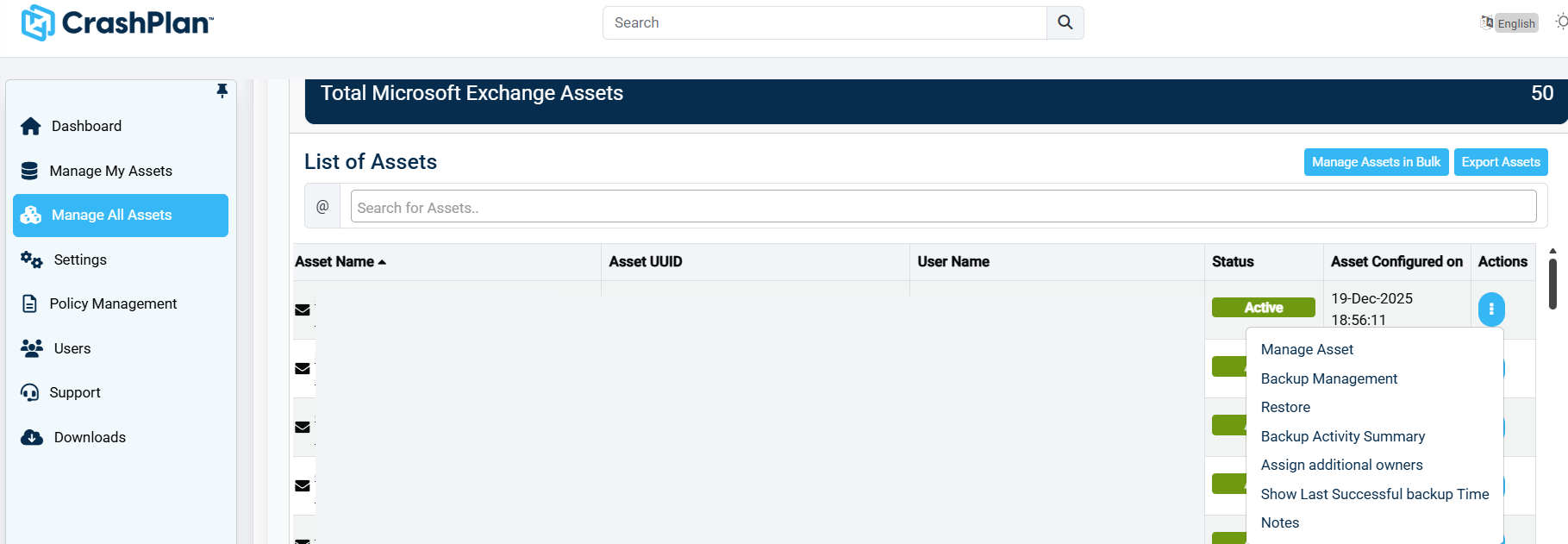
Use the Actions menu in the Manage All Assets page to perform administrative tasks on an individual Microsoft Exchange asset.
From the left navigation pane, click Manage All Assets.
Select the Microsoft Exchange workload tab to view all Exchange assets.
Locate the required asset from the List of Assets table.
Use the Search for Assets field to quickly find a specific asset.
In the Actions column, click the three-dot menu (⋮) next to the asset. Select one of the available actions:
Manage Asset
Opens the asset details page where you can browse mailbox content, review backup points, and manage the asset.
- Backup Management
Configure or update backup settings, policies, and schedules for the selected asset.
- Restore
Restore mailbox data such as emails, folders, or items from available backup snapshots.
- Backup Activity Summary
View backup history, status, and recent backup activity for the asset.
- Assign additional owners
Add one or more users as additional owners for the asset to provide delegated access.
- Show Last Successful Backup Time
Displays the timestamp of the most recent successful backup.
- Notes
Add or view administrative notes associated with the asset.
The selected asset action is applied, allowing administrators to manage backup, restore, ownership, and monitoring tasks for individual Microsoft Exchange assets.
Use the scroll bar or pagination controls to navigate through additional assets.